







About Slope
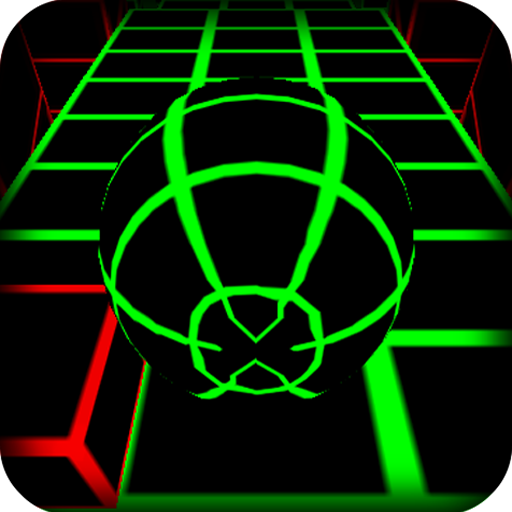
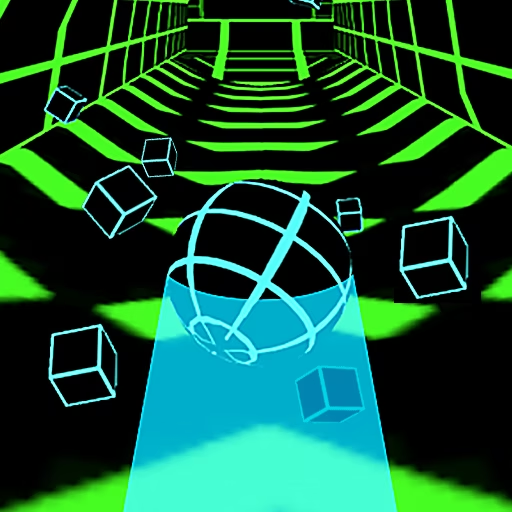
Slope strips the rolling-ball challenge down to lateral steering and a track that keeps coming. The ball travels forward automatically through a three-dimensional course of slopes, narrow platforms, and gaps. Your task is to keep it on the available surface while avoiding the red obstacles that interrupt the route.
There is no need to plan a finish-line sprint: this is a distance challenge, and the increasing pace makes each correction more expensive. A small movement can be enough to pass a block, but the same input held too long may carry the ball over the edge. Reading the next platform early gives you a chance to move deliberately before the course demands an immediate reaction.
How to Play Slope
Survive the descent for as much distance as possible without hitting red obstacles or leaving the track.
- Let the ball move forward automatically when the run begins.
- Use A/D or the left/right arrows to steer around obstacles.
- Line up with the next platform before reaching a gap or drop.
- Continue making small corrections as the pace increases; a collision or fall ends the attempt.
Controls & Timing
A correction has a cost
When a block closes one side of the track, move only far enough to clear it. Keeping the input held after the path is open risks trading the block for the edge.
Transitions between platforms
At a gap or drop, identify the receiving platform before you reach the end. The current slab can look safe even when your line misses the one beyond it.
Growing speed
As the ball accelerates, move your gaze farther ahead. Waiting for an obstacle to reach the ball leaves a shorter interval for the same steering decision.
Controls
| Input | Action | When to use |
|---|---|---|
| A / ← | Steer left | To align with open track on the left |
| D / → | Steer right | To align with open track on the right |
High Score Tips
- Use the center of a wide platform as a recovery position, since it preserves room for a later correction in either direction.
- Read a red block together with the following gap; avoiding the block is not enough if your exit line misses the next slab.
- Reduce unnecessary weaving so each actual hazard receives a clear, isolated response.
- Judge your improvement by the difficult transitions you handle consistently, not only by the final distance of one lucky run.
- When speed rises, scan earlier instead of simply pressing harder or longer; oversized movements reduce the margin you are trying to protect.
Key Features
- Automatic forward motion: Your attention stays on left-right placement.
- Neon three-dimensional course: Slopes, gaps, and platforms define the route.
- Red collision hazards: Visible blocks break up otherwise usable surfaces.
- Distance-based survival: The run rewards staying in control as the pace builds.
Frequently Asked Questions
Do I need to hold a forward key?
No. The ball moves forward automatically. Use A and D or the left and right arrows to manage its position across the track, leaving your attention free to read obstacles ahead.
What happens if I touch a red block?
Red obstacles end the run on contact. Plan a line that clears the block while still leaving space before the platform edge, rather than making the largest possible dodge.
Why do I fall after avoiding an obstacle?
The dodge may continue after it has already done its job. Stop the steering correction when the opening is clear and check whether your new position still matches the next platform.
Is there a finish line to reach?
Slope is presented as an endless distance challenge. The practical goal is to extend a clean run, with the increasing pace making later decisions harder rather than leading toward a fixed finish.
Where should I look at high speed?
Look toward the next platform transition and upcoming red blocks. Keep the ball in peripheral view while giving yourself enough advance information to choose a route before the obstacle is directly in front of it.