

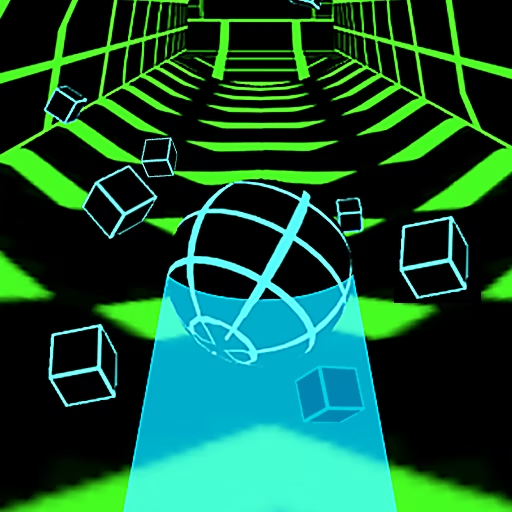



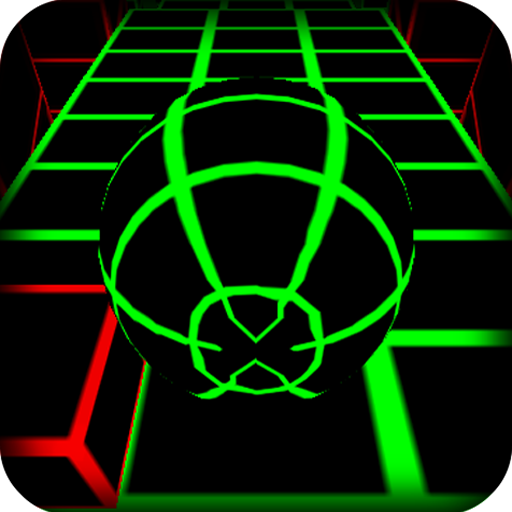



About Slope 3
Slope 3 begins with a ball moving into a course of slopes, ramps, gaps, and red barriers. Forward speed is automatic, leaving you to choose where the ball sits across the track. The course asks for successive alignments: clear the current wall, reach the next surface, and arrive with room to handle the obstacle after it.
The increasing pace makes this a test of how cleanly you connect those decisions. A frantic correction may avoid an immediate collision while leaving the ball pointed at empty space. There are no power-ups in the described version to compensate for that mistake. A good run comes from preserving a usable position as the track changes beneath you.
How to Play Slope 3
Extend the run by clearing red hazards and keeping the ball aligned with each new platform.
- Begin the run and follow the ball out toward the descending track.
- Steer left with A or the left arrow, and right with D or the right arrow.
- Read ramps and gaps as connected transitions rather than separate obstacles.
- Keep adjusting as the pace builds; a red-block collision or fall ends the run.
Controls & Timing
Leaving the opening
Use the first visible section to establish your position on the track. Avoid carrying an unnecessary steering input into the first platform transition.
Chained obstacles
When two hazards appear close together, choose a route through both. Dodging the first in isolation may leave no workable position for the second.
Faster decisions
Later sections give you less time between seeing and reaching a hazard. Move your observation point farther down the course instead of making larger corrections.
Controls
| Input | Action | When to use |
|---|---|---|
| A / ← | Steer to the left | When the usable route shifts left |
| D / → | Steer to the right | When the usable route shifts right |
High Score Tips
- Keep a steering correction tied to a visible destination, such as the middle of the next platform, so you know when to stop it.
- After clearing a wall, check the next gap before returning toward the center; the next platform may require staying on the same side.
- Favor a stable approach to ramps over an extra last-moment weave, because the takeoff line affects the flight that follows.
- Notice whether repeated failures come from reacting late or holding too long; those problems need different corrections.
- Use the early portion of each attempt to establish controlled inputs that will still be manageable when the pace increases.
Key Features
- Continuous descent: Automatic movement keeps the route coming toward the ball.
- Connected platform challenges: Walls, gaps, and ramps must be handled in sequence.
- Increasing pace: Later steering decisions have a smaller margin.
- Direct survival loop: Positioning remains central without power-up management.
Frequently Asked Questions
How do I control Slope 3?
Steer with A and D or the left and right arrow keys. The ball already moves forward, so concentrate on where each input places it relative to the next obstacle and platform.
Are power-ups part of this version?
The source description specifies a run without power-ups. Build your plan around steering and track awareness rather than expecting a shield or temporary ability to recover an unsafe route.
Why do I fail immediately after a successful dodge?
The dodge may put you on the wrong side for the next platform. Read obstacles as a sequence and finish each movement somewhere that also leaves a usable continuation.
Does a longer steering hold help at high speed?
It may move the ball farther than you intended. Higher pace is a reason to read the route earlier, while keeping corrections limited to the distance needed for the opening ahead.
What is the main goal?
Travel as far as you can without hitting a red hazard or falling from the platforms. Each safe transition extends the attempt, while the increasing pace makes maintaining that sequence progressively harder.